
SpectacoKids Editorial Team
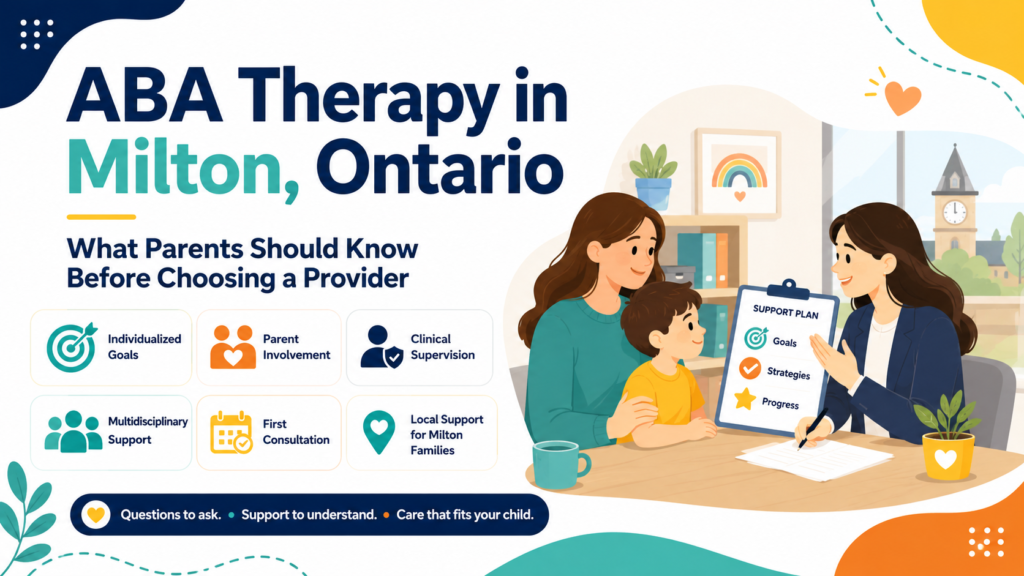
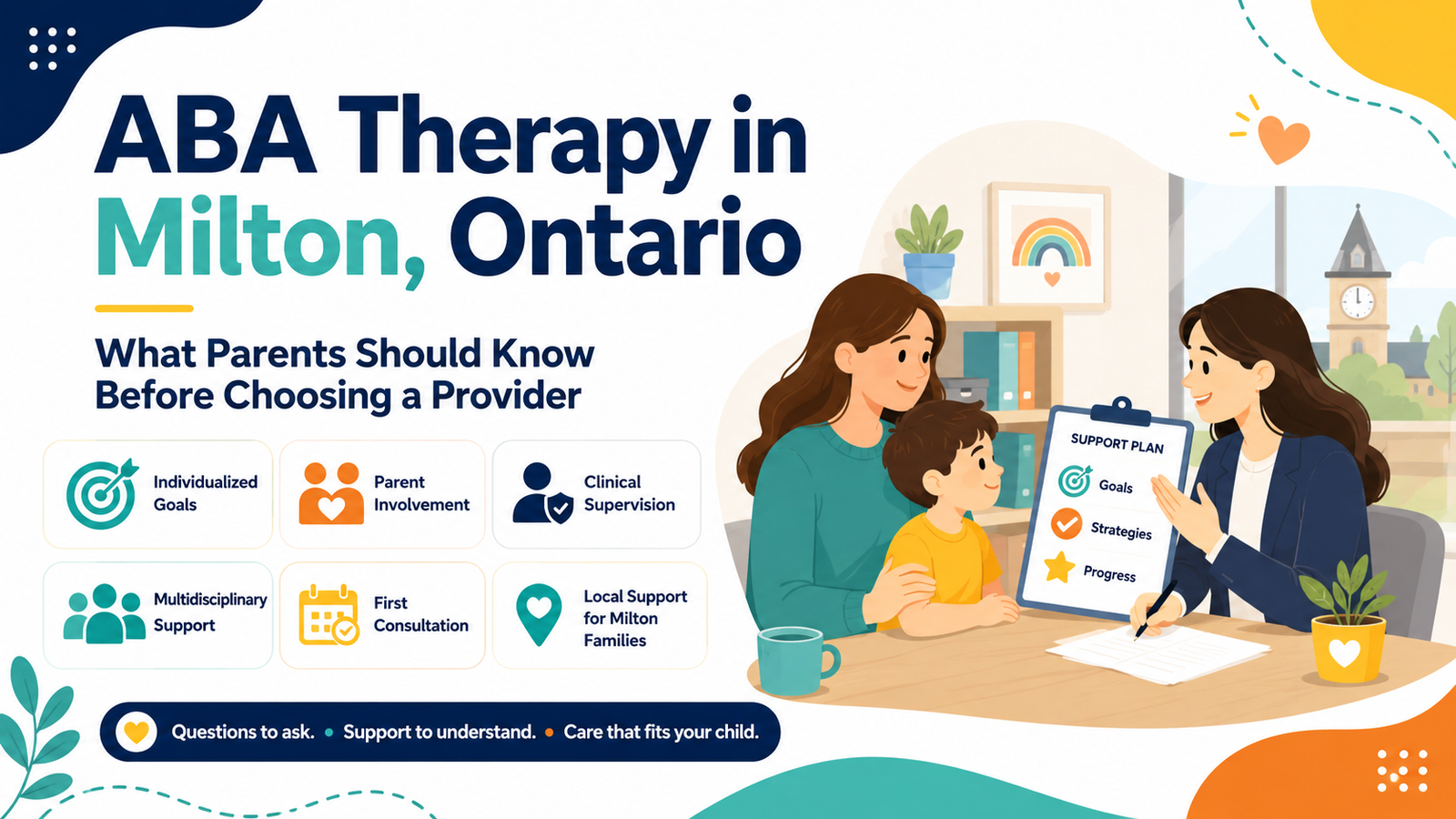
Finding the right ABA therapy Milton provider can feel like a big decision for parents.
You may be comparing therapy centres, in-home options, clinical supervision, therapist qualifications, costs, Ontario Autism Program funding, and how involved your family will be in the process.
It can feel overwhelming, especially when every provider seems to describe their services differently.
This guide is designed to help Milton parents understand what ABA therapy is, who it may support, what questions to ask before starting, and why individualized goals, parent involvement, clinical supervision, and multidisciplinary care matter.
It is not about choosing the biggest clinic or the provider with the most polished marketing. It is about choosing support that is clear, qualified, family-centred, and appropriate for your child.
SpectacoKids provides ABA, Speech, and Occupational Therapy under one roof, with in-centre and in-home services across Milton, Mississauga, Oakville, and Burlington. SpectacoKids’ Milton Centre is located at Unit 202 – 61 James Snow Pkwy N, Milton, ON L9E 0H1.
What Is ABA Therapy?
ABA stands for Applied Behaviour Analysis.
ABA therapy is a structured, evidence-informed approach that can help children build meaningful skills and reduce behaviours that may interfere with learning, communication, safety, or daily life.
Ontario’s Autism Program describes ABA as support that can help children and youth on the autism spectrum by systematically teaching skills and reducing interfering behaviour that may be harmful or unsafe.
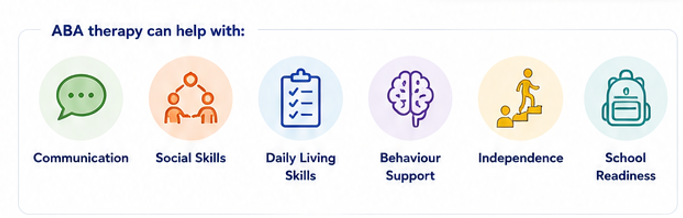
ABA therapy may support areas such as:
Communication
Social interaction
Play skills
Learning readiness
Daily living skills
Transitions
Following routines
Safety skills
Emotional regulation
Independence
Behaviour support
School readiness
A strong ABA program should not be about forcing a child to act like someone else.
It should be about understanding the child, teaching practical skills, supporting communication, reducing distress, and helping the child participate more confidently at home, school, therapy, and in the community.
Who May Benefit From ABA Therapy?
ABA therapy may support children and youth with autism spectrum disorder and other developmental needs when they require structured support to build skills or reduce barriers to learning and daily life.
Some parents look for ABA therapy because their child struggles with:
Asking for help
Following routines
Transitions
Toilet training
Mealtime routines
Safety awareness
Communication
Play skills
School readiness
Aggression or self-injury
Difficulty waiting
Difficulty with changes
Daily independence
A child does not need the same program as another child. The right support depends on their strengths, needs, goals, communication style, family priorities, and current routines.
For Milton families, this is why the first consultation and assessment process matters.
Questions to Ask an ABA Provider in Milton
Before starting services, parents should feel comfortable asking direct questions.
A transparent ABA provider should be able to explain how their care process works, who supervises therapy, how goals are created, how progress is measured, and how parents are involved.
Here are important questions Milton families can ask.
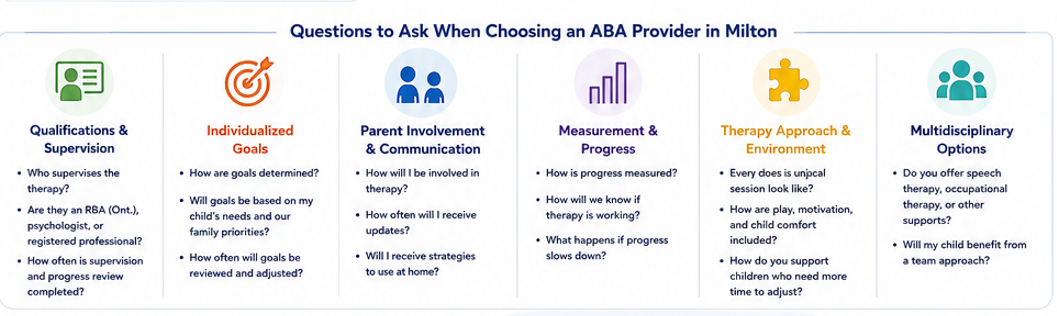
1. Who Supervises My Child’s ABA Program?
Clinical supervision matters.
Parents should know who is responsible for designing, reviewing, and adjusting the program.
In Ontario, the title “Behaviour Analyst” is restricted to registrants of the College of Psychologists and Behaviour Analysts of Ontario who are registered as Behaviour Analysts. This change came into effect on July 1, 2024.
Ask:
Who supervises the ABA program?
Are they an RBA (Ont.)?
How often do they review the program?
Do they observe sessions?
Do they meet with parents?
How can I verify their credentials?
Clinical supervision provides professional oversight, review, and accountability. It should not be vague or hidden from families.
2. What Qualifications Do the Therapists Have?
The therapist working directly with your child may not be the same person supervising the program.
That can be normal, but parents should understand the difference.
Ask:
What training does the direct therapist have?
Who trains them?
Who observes them?
How often do they receive feedback?
What happens if my child is not responding well?
How are therapists trained in communication, dignity, and safety?
The goal is not to judge titles only. The goal is to understand the care structure.
3. How Are Goals Created?
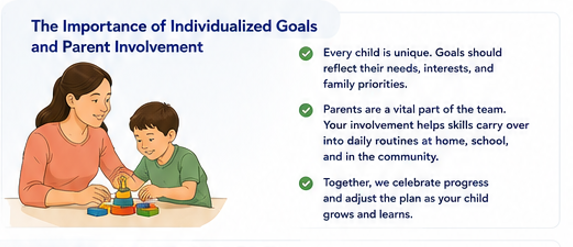
Therapy goals should be individualized.
They should not be copied from a generic checklist without understanding your child.
Ask:
Who creates the goals?
How are parent priorities included?
Are goals based on assessment?
Do goals connect to real life?
Will goals support home, school, or community routines?
How often are goals reviewed?
Ontario’s OAP guidance notes that families receiving core clinical services work with their chosen clinician to develop a treatment plan that may include assessment of the child’s current needs and priority goals.
A good ABA goal should help the child in everyday life.
For example:
Requesting help instead of crying
Following a morning routine with visual support
Communicating “break” during a difficult task
Waiting safely for a short period
Using a bathroom routine with less support
Playing with a sibling for a few minutes
Transitioning from preferred to non-preferred activities
4. How Is Progress Measured?
ABA therapy should include progress tracking.
That does not mean parents need complicated charts every day. It means the provider should have a clear way to know whether strategies are helping.
Ask:
What data do you collect?
How often is progress reviewed?
Will parents receive updates?
What happens if progress slows down?
How do you decide when to change a strategy?
How will I know if therapy is working?
Progress should be explained in plain language.
Parents should understand what their child is working on, what is improving, and what may need adjustment.
Image Placement 4: Add Credential Check Image Here
Use: spectacokids-aba-therapy-milton-credential-check.png
Alt text: Parent checking ABA provider qualifications and clinical supervision.
Why Individualized Goals Matter
Every child is different.
One child may need help with communication.
Another may need support with toileting.
Another may need help with school readiness.
Another may need support reducing unsafe behaviour.
Another may need help with transitions and daily routines.
That is why ABA therapy should not feel like a fixed package.
Individualized goals should consider:
The child’s strengths
The child’s communication style
Family priorities
Sensory needs
Daily routines
School or daycare concerns
Safety needs
Parent capacity
Cultural and family values
Other therapies the child may receive
A child-centred plan should answer this question:
How will this goal improve the child’s real life?
If parents do not understand why a goal matters, they should ask.
A good provider should be able to explain the goal clearly.
Why Parent Involvement Matters
Parents are not just observers.
They are part of the therapy process.
Children spend most of their time outside therapy sessions. If parents do not understand the strategies, it becomes harder to carry progress into daily life.
Parent involvement may include:
Sharing family goals
Participating in consultation
Receiving session updates
Joining progress review meetings
Learning home strategies
Asking questions
Giving feedback
Helping skills carry over into daily routines
Ontario’s current core clinical services objectives include increasing parent and caregiver capacity, including their knowledge and skills in using support strategies.
That means parent involvement should not be treated as extra.
It is part of meaningful care.

Why Clinical Supervision Matters
ABA therapy should include qualified clinical oversight.
Clinical supervision helps ensure that goals, teaching strategies, data, therapist training, parent concerns, and progress reviews are handled thoughtfully.
Parents can ask:
Who is clinically responsible for the program?
How often are sessions reviewed?
Who updates goals?
Who reviews data?
Who trains the therapist?
How are concerns handled?
Can parents request a meeting with the supervisor?
The Ontario Autism Program says families may choose eligible core clinical services from providers of their choice, as long as the service provider delivering or supervising the service meets the qualification requirements in the program guidelines.
For families choosing ABA therapy in Milton Ontario, this is an important trust signal.
Why Multidisciplinary Options Can Help
Some children benefit from ABA therapy alone.
Others may need support from more than one discipline.
A child may need:
ABA Therapy for routines, learning, behaviour support, communication, and daily living skills
Speech Therapy for communication, language, articulation, or feeding support
Occupational Therapy for sensory regulation, motor skills, self-care, and independence
Psychotherapy for anxiety, emotional regulation, coping skills, or family support
Social Skills Groups for peer interaction and group confidence
Ontario’s OAP core clinical services include categories such as Applied Behaviour Analysis, Speech-Language Pathology, Occupational Therapy, and Mental Health services.
SpectacoKids offers ABA, Speech, and Occupational Therapy under one roof, with services available in-centre and in-home across Milton and nearby areas.
This can help families when a child’s needs are connected across communication, sensory regulation, behaviour, daily routines, and emotional support.
What to Expect During the First Consultation
The first consultation should help parents understand the provider and help the provider understand the child.
During the consultation, families may discuss:
The child’s strengths
Current concerns
Diagnosis or assessment history
Communication style
Behaviour patterns
School or daycare concerns
Daily routines
Family goals
Previous therapy experience
Funding questions
Possible service options
Next steps
Parents should leave with a clearer understanding of what happens next.
A consultation should not pressure families into a decision before their questions are answered.
Ask:
What does the first month look like?
Who will work with my child?
Who supervises the program?
How are goals created?
How often will parents receive updates?
What happens if my child needs more time to adjust?
Can services be coordinated with Speech or OT if needed?
SpectacoKids’ ABA Therapy page lists a free consultation option and says families can book by phone, email, or online calendar.
Local Considerations for Milton Families
When choosing an ABA provider in Milton, location matters, but it should not be the only factor.
Milton families may want to consider:
How close the centre is to home or school
Whether in-home options are available
Whether the schedule works with family routines
Whether the provider understands local school and community needs
Whether the provider offers parent coaching
Whether other services are available if the child needs them
Whether the centre feels welcoming and child-friendly
Whether communication is clear and consistent
SpectacoKids’ Milton Centre is located at Unit 202 – 61 James Snow Pkwy N, Milton, ON L9E 0H1.
For many families, a local provider can make therapy more practical. But the quality of supervision, goals, communication, and family involvement should still come first.
Red Flags Parents Should Not Ignore
Be careful if a provider:
Cannot explain who supervises therapy
Avoids questions about qualifications
Does not discuss individualized goals
Does not involve parents
Cannot explain how progress is measured
Gives vague promises
Does not review goals regularly
Does not explain what happens in sessions
Discourages parents from asking questions
Does not explain how concerns are handled
Focuses only on compliance without discussing communication, dignity, or regulation
Parents should not feel uncomfortable asking basic questions.
A strong provider should welcome informed families.
SpectacoKids’ Milton ABA Services
SpectacoKids provides ABA Therapy, Speech Therapy, Occupational Therapy, Psychotherapy, Respite Care, Camps, and Group Classes for children and families. Services are available in-centre and in-home across Milton, Mississauga, Oakville, and Burlington.
For families exploring autism therapy Milton or ABA services Milton, SpectacoKids offers a multidisciplinary care environment where families can learn more about ABA support, therapy options, and the care process.
Families in Milton and Mississauga can contact SpectacoKids to learn more about ABA services and the care process.
Conclusion
Choosing ABA therapy in Milton is an important decision.
Parents should understand what ABA therapy is, who it may support, who supervises the program, how goals are created, how progress is measured, and how families are involved.
The right provider should explain their process clearly.
For Milton families, it is also helpful to consider location, scheduling, in-centre and in-home options, parent communication, and whether multidisciplinary support is available if the child needs it.
ABA therapy should feel thoughtful, transparent, and connected to real life.
Contact SpectacoKids
Website: www.spectacokids.com
Email: info@spectacokids.com
Phone: +1 647-996-4409
Milton Centre:
Unit 202 – 61 James Snow Pkwy N, Milton, ON L9E 0H1
Mississauga Centre:
3353 The Credit Woodlands, Unit 5, Mississauga, ON L5C 2K1
Mississauga Centre:
Unit 52 – 1077 N Service Rd, Mississauga, ON L4Y 1A6
SpectacoKids lists its phone number, email, free consultation option, and centre locations on its official contact page.
FAQ Section
What is ABA therapy?
ABA, or Applied Behaviour Analysis, is an evidence-informed approach that can help children build meaningful skills and reduce behaviours that may interfere with learning, safety, communication, or daily life.
Who may benefit from ABA therapy in Milton?
ABA therapy may support children with autism or developmental needs who require help with communication, routines, transitions, daily living skills, school readiness, social interaction, safety, or behaviour support.
What should parents ask before choosing an ABA provider?
Parents should ask who supervises the program, what qualifications therapists have, how goals are created, how progress is measured, how parents are involved, and how concerns are handled.
Why is clinical supervision important in ABA therapy?
Clinical supervision provides professional oversight, review, and accountability. It helps ensure therapy goals, data, strategies, and progress are reviewed by a qualified professional.
Should ABA therapy goals be individualized?
Yes. ABA therapy goals should be based on the child’s needs, strengths, communication style, family priorities, and daily routines. Goals should connect to real-life skills.
Does SpectacoKids offer ABA therapy in Milton?
Yes. SpectacoKids provides ABA Therapy in Milton, along with Speech Therapy, Occupational Therapy, Psychotherapy, Respite Care, Camps, and Group Classes. Services are available in-centre and in-home across Milton, Mississauga, Oakville, and Burlington.
#MiltonOntario #ABATherapyMilton #AutismOntario #SpectacoKids
SpectacoKids Editorial Team