
Is My Toddler a Late Talker? A Canadian Parent’s Guide to Speech Therapy
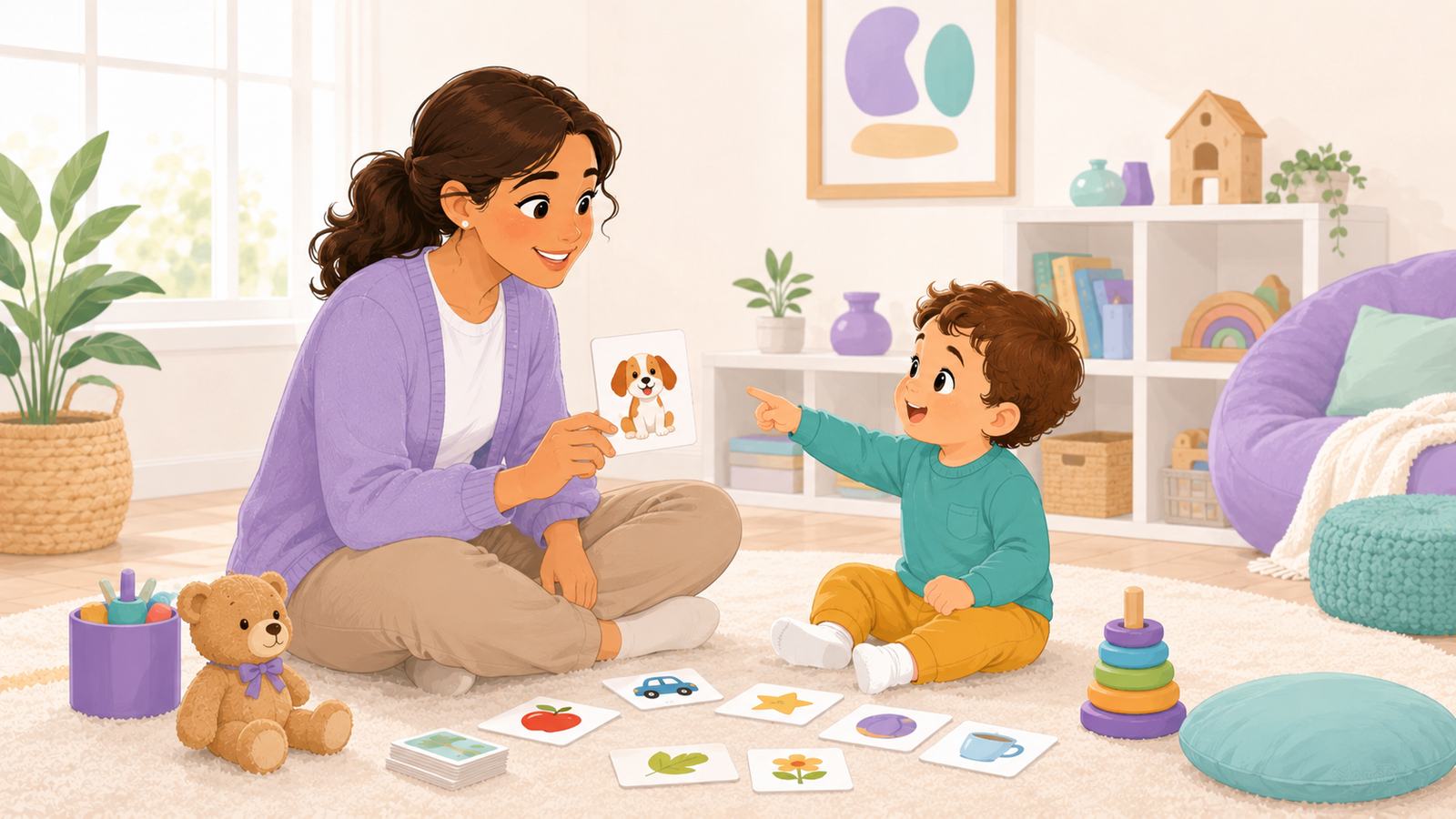
Every child communicates at their own pace.
Some toddlers start using words early. Others take more time, rely on gestures, or seem to understand everything but say very little. For parents, this can bring a lot of questions.
Should my toddler be talking more by now?
Is this just a phase?
Should I wait and see?
When should I ask for speech therapy?
These are very common concerns, and asking questions early is not overreacting. It is a caring step.
Speech and language development can look different from child to child, but there are helpful milestones that give parents a general idea of what to watch for. HealthLink BC notes that many children have a burst in talking around 18 months, and by 24 months many children use at least 50 words and begin using two-word phrases.
This does not mean every child will follow the timeline perfectly. But if your child is not using words, has limited communication, or seems frustrated when trying to express needs, speech therapy may help.
What Does “Late Talker” Mean?
A late talker is usually a toddler who is developing spoken language more slowly than expected, even though they may understand many things and show interest in people, play, and everyday routines.
Some late talkers catch up over time. Others may need extra support to build communication skills.
A late talker may:
Use fewer words than expected
Rely mostly on pointing, pulling, or gestures
Get frustrated when others do not understand
Understand more than they can say
Use sounds instead of clear words
Have trouble combining words
Avoid trying to say new words
Use the same few words repeatedly
It is important to remember that late talking is not laziness, stubbornness, or poor parenting. Communication is a developmental skill, and some children need support to build it.
Speech Is Not the Same as Language
Parents often use the words speech and language together, but they are not exactly the same.
Speech is how a child says sounds and words.
Language is how a child understands and uses words to communicate ideas.
A child may have difficulty with speech, language, or both.
For example:
A child may know what they want but struggle to say the word clearly.
A child may say words but not understand directions.
A child may repeat words but not use them to communicate needs.
A child may understand everything but use very few spoken words.
This is one reason speech-language therapy looks at the whole communication picture, not just how many words a child says.
Signs Your Toddler May Need Speech Therapy
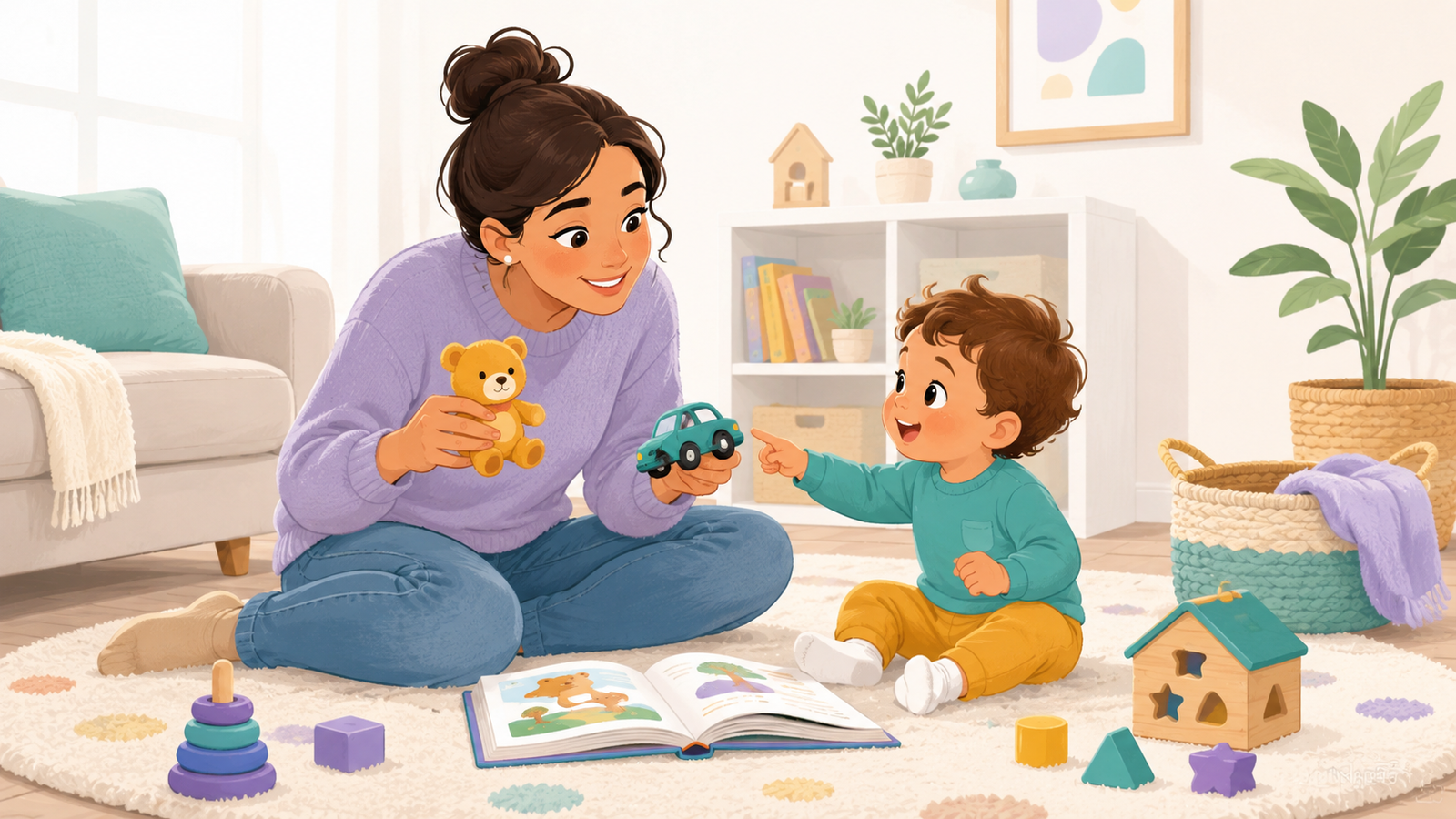
You do not need to wait until the problem feels serious before asking for help.
Some signs that may suggest your child could benefit from speech therapy include:
Not using gestures such as pointing or waving by 12 months
Preferring gestures over vocal sounds by 18 months
Having trouble imitating sounds
Having difficulty understanding simple verbal requests
Not using words or phrases spontaneously by age 2
Using only repeated sounds or words without communicating broader needs
KidsHealth recommends speaking with a doctor if a child shows concerns like not using gestures by 12 months, preferring gestures over vocalizations by 18 months, or not producing words and phrases spontaneously by age 2.
Another helpful milestone is around 19 to 24 months. ASHA notes that children in this range often begin putting two or more words together, following simple two-step directions, using words like “me” and “you,” and asking for help with words.
Milestones are guides, not strict rules. But if your parent instinct says something feels different, it is okay to ask questions.
Common Parent Questions About Late Talking
“Should I Wait and See?”
Many parents hear, “They will talk when they are ready.”
Sometimes that is true. But waiting too long can delay helpful support.
Early help does not harm a child. Speech therapy is not about pressure. It is about creating more opportunities for connection, communication, and confidence.
If your child catches up, wonderful. If they need support, starting early can make daily life easier for the child and family.
“What if My Child Understands Everything?”
Understanding language is a great strength.
But if your child understands many things and still struggles to express needs, speech therapy can help them turn understanding into communication.
For example, a child may know where their shoes are, understand “time to go,” and follow routines, but still be unable to say:
Help
More
Open
All done
I want
My turn
No
Stop
When children cannot express basic needs, frustration can build quickly.
“What if My Child Uses Gestures?”
Gestures are communication, and they matter.
Pointing, reaching, waving, shaking the head, bringing an item to a parent, or leading an adult to something are all meaningful forms of communication.
Speech therapy does not ignore these. It builds from them.
A therapist may help a child move from gesture to sound, from sound to word, from word to phrase, and from phrase to more confident communication.
What Parents Can Do at Home
You do not need expensive toys or complicated activities to support language.
Many strong communication moments happen during ordinary routines.
Try these simple strategies:
1. Talk About What You Are Doing
Use short, simple language during daily routines.
During snack time:
“Apple.”
“Cut apple.”
“More apple.”
“Apple yummy.”
During bath time:
“Water on.”
“Wash hands.”
“Splash.”
“All done.”
This helps your child hear words connected to real actions.
2. Give Choices
Instead of asking broad questions like “What do you want?” offer two clear choices.
“Milk or water?”
“Car or blocks?”
“Blue shirt or red shirt?”
“Book or bubbles?”
Hold up the items if possible. This gives your child a reason to communicate.
3. Pause and Wait
Sometimes adults talk quickly and fill every silence.
Try pausing.
If your child points to a snack, pause for a few seconds and look expectant. They may make a sound, gesture, or attempt a word.
The goal is not to pressure them. The goal is to create space for communication.
4. Repeat and Add One Word
If your child says “car,” you can say:
“Red car.”
“Car go.”
“Big car.”
“More car.”
This models the next step without making the child feel corrected.
5. Read Picture Books Together
You do not need to read every word on the page.
Point to pictures and name them.
“Dog.”
“Dog running.”
“Baby sleeping.”
“More bubbles.”
Books are powerful because they create repetition, shared attention, and natural language.
6. Celebrate Every Attempt
A sound, gesture, eye contact, point, sign, or word attempt all count.
When children feel successful, they are more likely to keep trying.
How Speech Therapy Helps Late Talkers
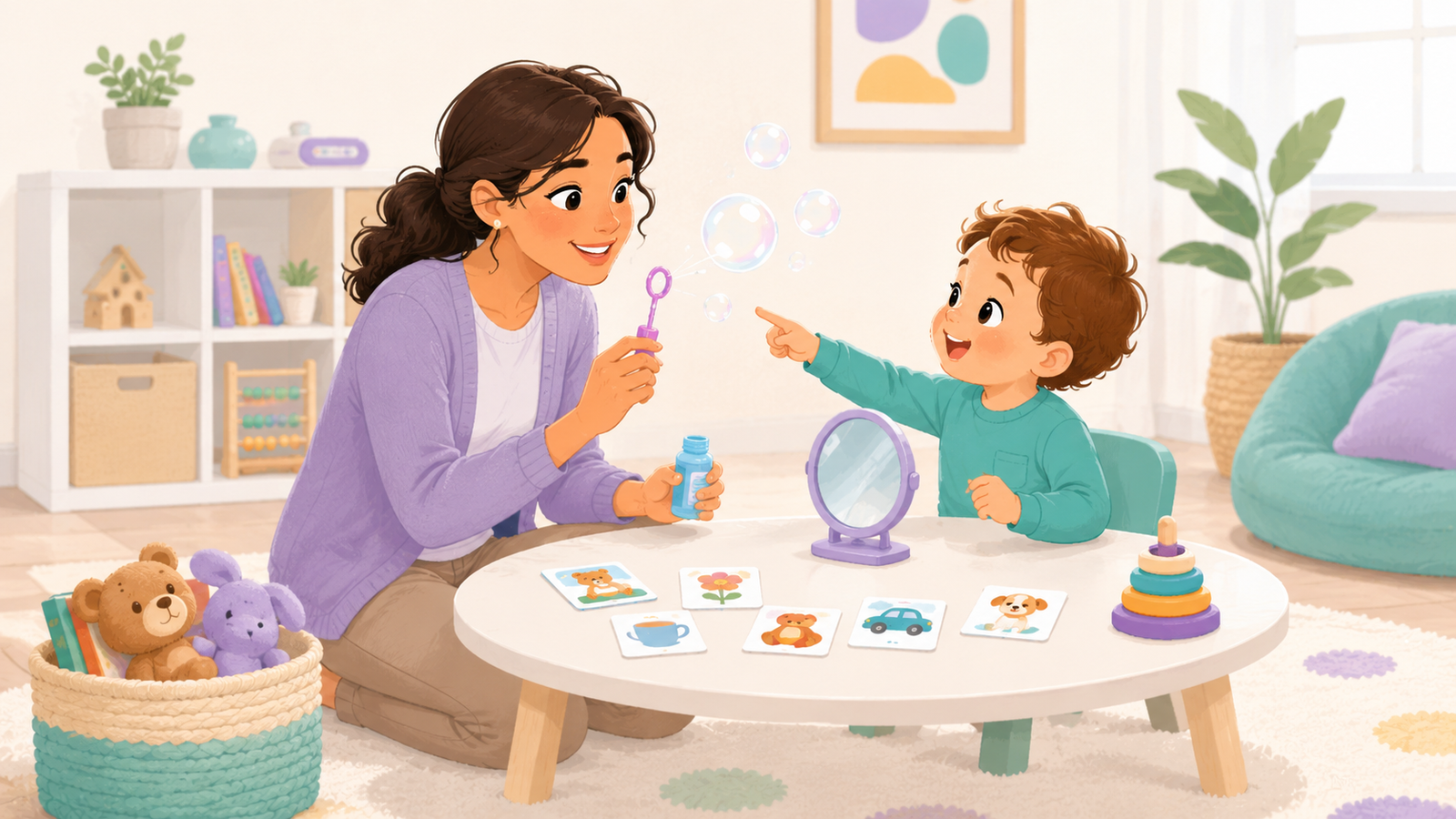
Speech therapy helps children build communication in a way that fits their age, needs, and personality.
A speech-language therapist may support:
First words
Understanding language
Using gestures and sounds
Following directions
Building vocabulary
Combining words
Improving clarity
Social communication
Feeding-related communication
Parent strategies for home
SpectacoKids describes its Speech Therapy service as support for communication, language, articulation, and feeding skills.
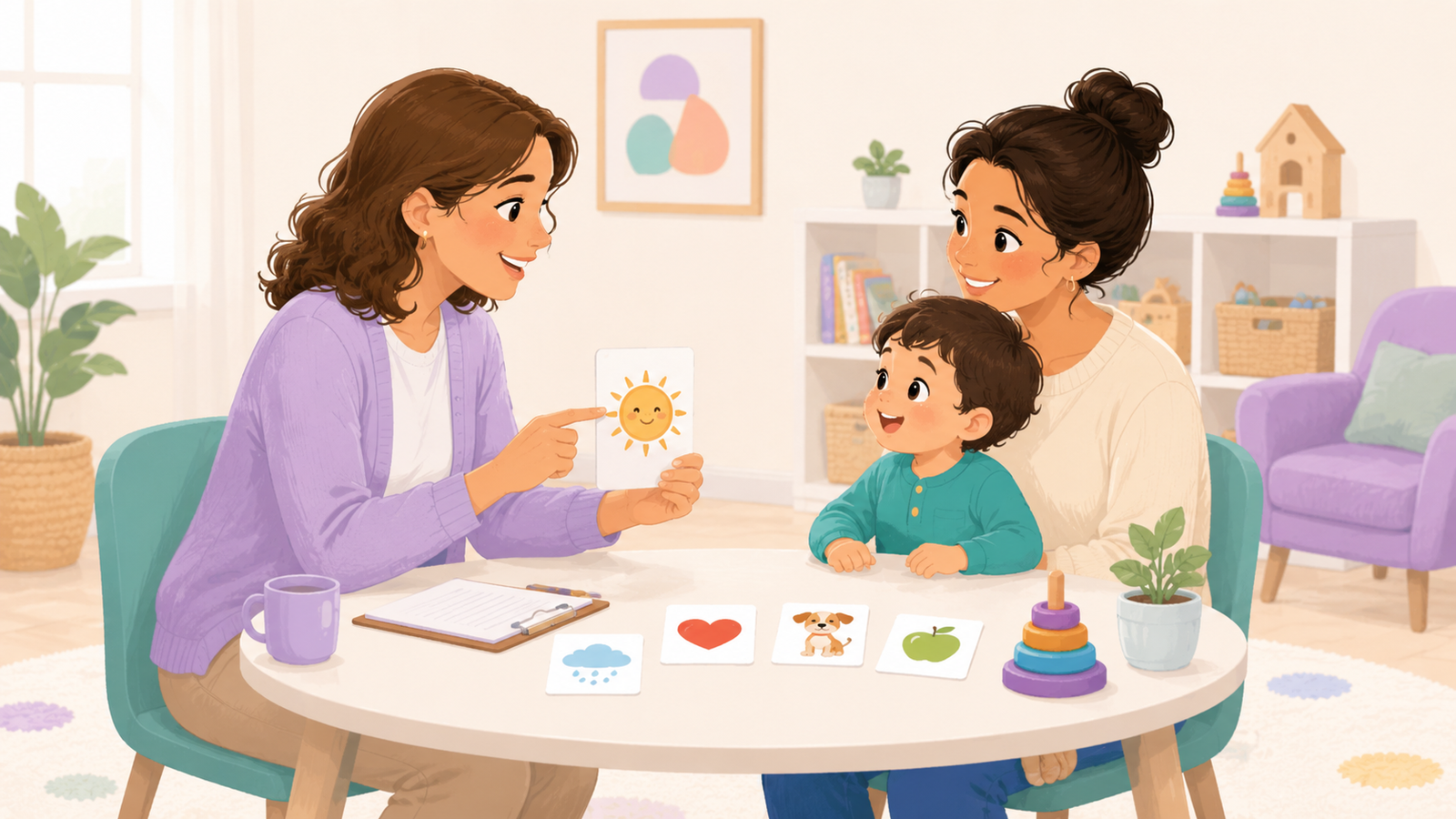
For toddlers, speech therapy is usually play-based. That means the child may be playing with toys, books, bubbles, pretend food, puzzles, or movement activities while the therapist creates communication opportunities.
It should not feel like a formal school lesson. It should feel supportive, engaging, and child-centred.
What Happens in a Speech Therapy Session?
Every child’s session may look different, but a speech therapy session may include:
Observing how the child communicates
Playing with toys to encourage words or sounds
Using picture cards or visual supports
Practicing turn-taking
Helping the child request items
Supporting understanding of simple directions
Modeling words during play
Coaching parents on what to try at home
The therapist may also ask about your child’s routines, favourite activities, frustrations, medical history, hearing, daycare experience, and family goals.
This helps create a plan that works beyond the therapy room.
When Speech Delay May Be Connected to Other Needs
Late talking can happen for many reasons.
Some children simply need more time and support. Others may have hearing concerns, developmental delays, autism-related communication differences, oral-motor challenges, or broader language difficulties.
This is why it helps to look at the whole child.
Does the child respond to their name?
Do they point to show interest?
Do they imitate sounds or actions?
Do they understand simple directions?
Do they play with others?
Do they use eye contact, gestures, or facial expressions?
Do they get frustrated when trying to communicate?
A speech therapist can help families understand whether the child needs speech therapy only or whether another support may also be helpful.
Why Early Support Matters
Communication affects many parts of childhood.
It helps children ask for help, connect with family, join play, express feelings, understand routines, and participate in daycare or school.
Speech and language delays can also affect learning and social confidence if they continue without support. A practical review on speech and language delay notes that untreated preschool speech and language delays may be linked to later learning concerns, which is one reason early identification matters.
Early support does not mean labeling a child. It means giving the child better tools to communicate.
A Gentle Reminder for Parents
If your toddler is not talking as much as other children, it can feel stressful.
But your child is not behind as a person.
Your child is not being difficult.
Your child is not failing.
They may simply need support to find their voice.
Every sound, gesture, point, attempt, and word is part of the journey.
Progress may look like one new word.
It may look like less frustration.
It may look like pointing instead of crying.
It may look like saying “more” for the first time.
It may look like your child finally being understood.
Those moments matter.
How SpectacoKids Can Help
SpectacoKids provides ABA Therapy, Speech Therapy, Occupational Therapy, Psychotherapy, Respite Care, ABA-based Camps, and Social Skills Group Classes for children and families. Their website lists in-centre and in-home services across Milton, Mississauga, Oakville, and Burlington.
If you are wondering whether your toddler is a late talker, a free consultation can help you understand the next best step.
You do not need to wait until communication becomes a bigger struggle.
Support can begin with one simple conversation.
Contact SpectacoKids
Website: www.spectacokids.com
Email: info@spectacokids.com
Phone: +1 647-996-4409
Locations:
Milton Centre
Unit 202 – 61 James Snow Pkwy N, Milton, ON L9E 0H1
Mississauga Centre
3353 The Credit Woodlands, Unit 5, Mississauga, ON L5C 2K1
Mississauga Centre
Unit 52 – 1077 N Service Rd, Mississauga, ON L4Y 1A6
Follow SpectacoKids:
Instagram: @spectacokids
Facebook: SpectacoKids
LinkedIn: SpectacoKids
Book a free consultation through the SpectacoKids website.