
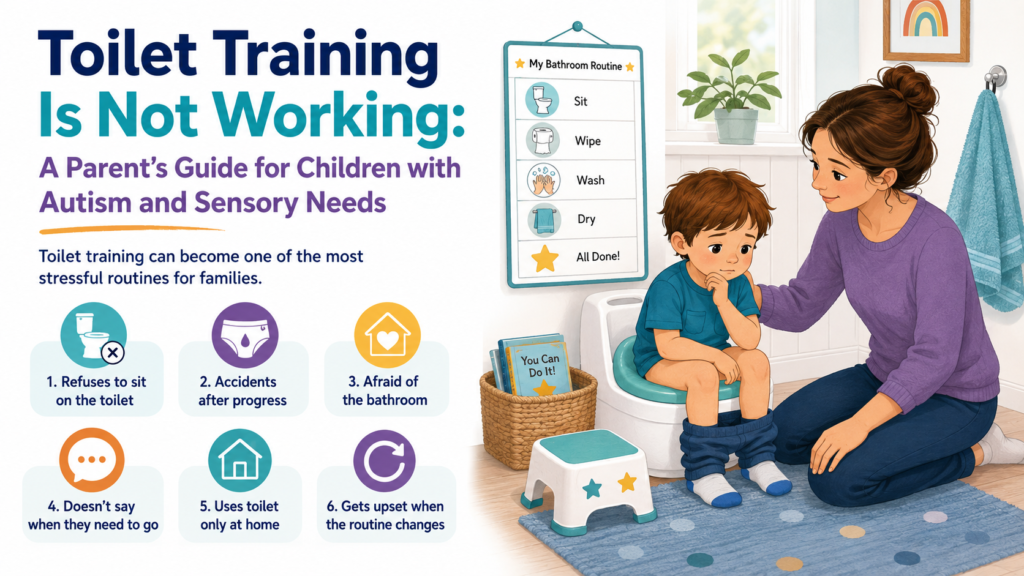
A Parent’s Guide for Children with Autism and Sensory Needs
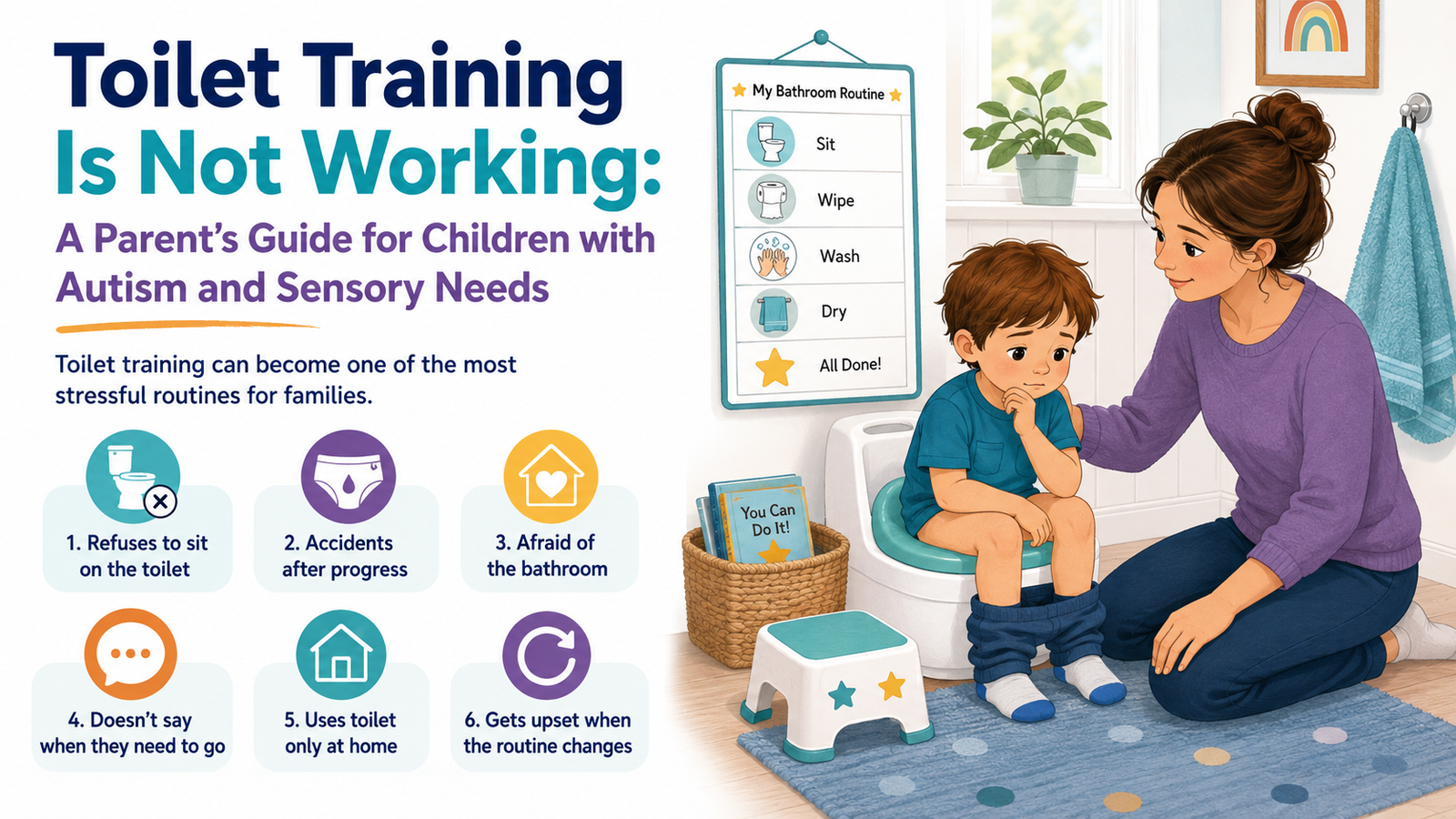
Toilet training can become one of the most stressful routines for families.
A child may refuse to sit on the toilet.
They may have accidents after showing progress.
They may be afraid of the bathroom.
They may not tell anyone when they need to go.
They may only use the toilet at home, but not at school or daycare.
They may become upset when the routine changes.
For parents, this can feel confusing and exhausting.
You may wonder:
Is my child ready?
Are we doing something wrong?
Is this connected to autism?
Could sensory issues be involved?
Can ABA Therapy or Occupational Therapy help?
The answer is often more complex than age alone.
Toilet training is not only about using the bathroom. It involves communication, body awareness, sensory comfort, routine, motor skills, emotional readiness, and daily living independence.
For some children, especially children with autism, developmental delays, sensory processing differences, or anxiety, toileting may need a slower and more supportive plan.
Why Toilet Training May Be Harder for Some Children
Many toilet training struggles are not about a child being stubborn.
They may be missing one or more skills needed for the routine.
Toilet training can require a child to:
Notice body signals
Stop an activity
Communicate the need to go
Move to the bathroom
Tolerate the bathroom environment
Pull clothing up and down
Sit safely on the toilet
Understand the sequence
Stay calm long enough to try
Wipe, flush, and wash hands
Repeat the routine consistently
That is a lot for a young child.
Ontario’s Autism Program guidelines include support needs across domains such as communication, activities of daily living, motor skills, sensory system, interfering behaviours, mental health, and adaptability. The same guidelines also mention building skills such as toileting and play within core clinical services.
Common Reasons Toilet Training May Not Be Working
1. Communication Challenges
Some children may not know how to say they need the bathroom.
They may not have the words yet.
They may not know how to ask for help.
They may not understand the question “Do you need to go?”
They may use behaviour instead of words when they feel uncomfortable.
In this case, toileting support may need to include simple communication tools such as visuals, gestures, signs, or short phrases like:
Bathroom
Help
All done
Pants
Wash hands
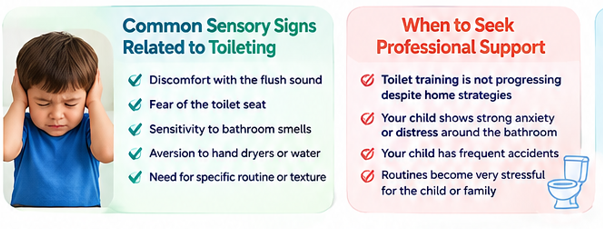
2. Sensory Sensitivities
Bathrooms can be overwhelming.
The toilet flush may be too loud.
The seat may feel cold or uncomfortable.
The bathroom may smell strong.
The lighting may feel too bright.
The hand dryer may be frightening.
The sensation of wiping may feel unpleasant.
The child may dislike the feeling of wet clothes or the feeling of sitting.
For a child with sensory sensitivities, the bathroom may not feel neutral. It may feel stressful or unsafe.
3. Body Awareness Difficulties
Some children have difficulty noticing internal body signals.
They may not recognize when they need to go.
They may notice too late.
They may not connect the feeling in their body with the bathroom routine.
Occupational Therapy can help support body awareness, sensory processing, and daily routines.
4. Routine and Transition Challenges
Toileting interrupts what a child is doing.
They may be playing, watching a video, eating, or resting. Stopping that activity and moving to the bathroom can feel difficult.
Some children need a predictable schedule rather than relying only on asking, “Do you need to go?”
A visual routine or timer can help make the transition clearer.
5. Fear or Anxiety
Some children are afraid of falling in.
Some are scared of the flush.
Some had a painful bowel movement and now avoid the toilet.
Some feel pressure from repeated reminders.
Some become anxious because they know adults are watching closely.
When toileting becomes stressful, the child may avoid it even more.
6. Motor and Self-Care Skills
Toileting also requires physical skills.
The child needs to manage clothing, sit with balance, wipe, flush, and wash hands. If these steps are difficult, the child may resist the whole routine.
This is why toileting is considered a daily living skill, not just a bathroom habit.
Autism Ontario describes activities of daily living as routines such as eating, dressing, washing hands, toileting, tooth brushing, bathing, and other self-help skills. It also notes that direct teaching can improve self-help skills and independence, and that behavioural approaches have good evidence for specific skills.
Signs Your Child May Not Be Ready Yet
A child may need more preparation if they:
Shows no interest in the bathroom
Cannot stay dry for longer periods
Does not seem aware of wet or dirty diapers
Cannot follow simple toileting instructions
Is extremely fearful of the toilet or bathroom
Cannot sit for a short period
Cannot communicate basic needs
Needs major help with most dressing tasks
Becomes distressed every time toileting is mentioned
Readiness does not look the same for every child.
Some children are ready at a younger age. Others need more time, more structure, and more support.
The goal is not to rush. The goal is to build the missing skills.
What Parents Can Try at Home
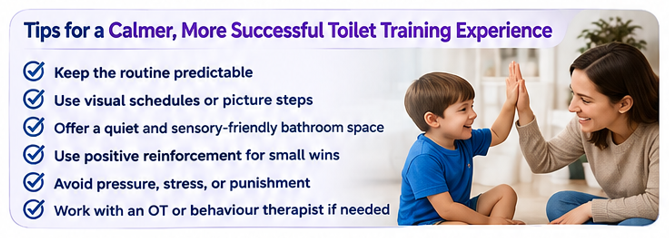
These strategies are not a replacement for therapy, but they can help make toileting calmer and more predictable.
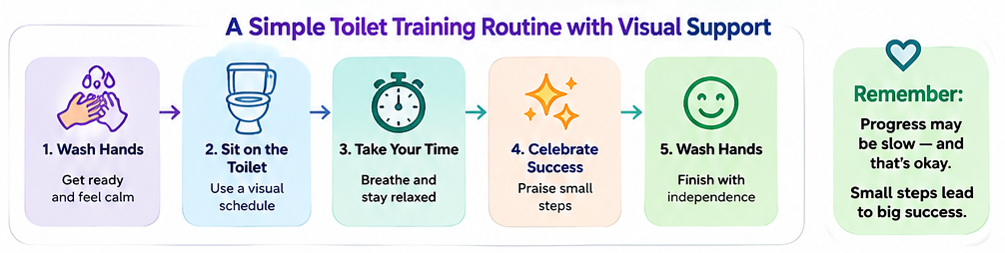
1. Create a Bathroom Routine
Use the same steps each time.
For example:
Go to bathroom
Pull pants down
Sit
Try
Wipe
Flush
Pull pants up
Wash hands
All done
Keep the language short and consistent.
2. Use Visual Supports
Many children understand routines better when they can see the steps.
A visual bathroom routine may include simple pictures for:
Bathroom
Pants down
Sit
Wipe
Flush
Wash hands
Finished
Visual supports reduce the amount of talking and help the child know what comes next.
3. Make the Bathroom More Comfortable
Look at the bathroom from your child’s perspective.
Is the seat too big?
Are their feet dangling?
Is the flush too loud?
Is the room too bright?
Is the toilet paper uncomfortable?
Is the hand dryer scary?
Does the child need a step stool?
Small changes can make the routine feel safer.
Try:
A child-size toilet seat
A footstool
Soft lighting
A familiar visual chart
Flushing after the child leaves the room if needed
Using wipes if appropriate
Avoiding loud hand dryers
Keeping the bathroom calm and predictable
4. Practise Sitting Without Pressure
If the child is afraid of the toilet, start small.
They may first stand near the toilet.
Then sit with clothes on.
Then sit for a few seconds.
Then sit during scheduled times.
Then slowly build from there.
Do not turn every attempt into a high-pressure event.
Small steps matter.
5. Use Scheduled Bathroom Times
Some children need routine before they can recognize body signals.
Try bathroom visits at predictable times:
After waking up
After meals
Before leaving home
After coming home
Before bath
Before bedtime
Keep it calm and short.
6. Avoid Asking Too Often
Constantly asking, “Do you need to go?” can create stress.
Some children automatically say no, even when they do need to go.
Instead, use calm routine language:
“It’s bathroom time.”
“First bathroom, then snack.”
“Sit, then all done.”
7. Celebrate Small Wins
Progress may look like:
Walking into the bathroom
Sitting for five seconds
Pulling pants down with help
Washing hands
Staying dry longer
Communicating discomfort
Using a visual card
Trying without crying
Celebrate effort, not only success.
What Not to Do
Try to avoid:
Shaming accidents
Punishing toileting refusal
Forcing a child to sit for too long
Comparing them to siblings
Reacting strongly to accidents
Making the bathroom feel scary
Removing all support too quickly
Turning toileting into a power struggle
A child who is already anxious or overwhelmed needs calm support, not pressure.
How ABA Therapy Can Help With Toilet Training
ABA Therapy can help break toileting into small, teachable steps.
A respectful ABA-based toileting plan may include:
Understanding current patterns
Tracking accidents and successful attempts
Teaching communication
Using visual supports
Building routine
Increasing independence step by step
Reinforcing small progress
Teaching clothing and hygiene steps
Helping the child use skills across home, school, and community settings
The goal is not to force a child into readiness. The goal is to teach the skills needed for success.
Ontario’s Autism Program core clinical services include Applied Behaviour Analysis, Speech-Language Pathology, Occupational Therapy, and mental health supports.
How Occupational Therapy Can Help
Occupational Therapy can support toileting when the challenge involves sensory processing, body awareness, motor skills, clothing, posture, hygiene, or routine.
OT may help with:
Understanding sensory triggers
Supporting body awareness
Improving sitting posture
Building independence with clothing
Supporting wiping and handwashing
Creating sensory-friendly bathroom routines
Helping the child tolerate the bathroom environment
Supporting daily living skills
Autism Ontario lists occupational therapists among providers for activities of daily living, and its fact sheet describes toileting as one of the daily living routines that may be taught through direct support.
How Speech Therapy Can Help
Speech Therapy may help if a child has difficulty understanding toileting language or communicating bathroom needs.
Speech therapy may support:
Requesting the bathroom
Using words, signs, gestures, or visuals
Understanding bathroom steps
Following simple directions
Communicating discomfort
Asking for help
Using phrases like “I need bathroom,” “help,” or “all done”
For some children, toileting improves when they have a clearer way to communicate what their body needs.
When to Seek Professional Help
Consider support if:
Your child is over 4 and shows no progress
Toileting causes extreme fear or distress
Accidents are frequent and stressful
Your child cannot communicate bathroom needs
Your child resists the bathroom intensely
Constipation, pain, or withholding is present
Toileting affects school, daycare, or family routines
You have tried strategies consistently without success
If your child has pain, constipation, blood, frequent urinary accidents, or sudden toileting regression, speak with a physician or health-care provider.
Therapy can help with skill-building, but medical issues should always be ruled out when needed.
A Gentle Reminder for Parents
Toilet training is not a race.
Your child is not failing.
You are not failing.
Progress does not always happen quickly.
For some children, toilet training needs:
More time
More visual support
More sensory comfort
More communication tools
More routine
More professional guidance
More patience
Small steps still count.
A child who can walk into the bathroom calmly is making progress.
A child who sits for a few seconds is making progress.
A child who communicates “no” or “help” is making progress.
A child who has one successful attempt is making progress.
Toileting is a daily living skill, and daily living skills can be taught with the right support.
How SpectacoKids Can Help
SpectacoKids provides ABA Therapy, Speech Therapy, Occupational Therapy, Psychotherapy, Respite Care, ABA-based Camps, and Social Skills Group Classes. Services are available in-centre and in-home across Milton, Mississauga, Oakville, and Burlington.
If toilet training is not working for your child, the right support may include:
ABA Therapy for step-by-step toileting routines
Occupational Therapy for sensory needs, body awareness, and independence
Speech Therapy for communication around bathroom needs
Parent coaching so strategies work at home
A whole-child plan that supports daily living skills
At SpectacoKids, therapy is not one-size-fits-all. The goal is to understand your child’s needs and create a practical plan that works in real life.
Your child deserves confidence, comfort, and independence.
And your family does not have to figure out toileting alone.
Contact SpectacoKids
Website: www.spectacokids.com
Email: info@spectacokids.com
Phone: +1 647-996-4409
Locations:
Milton Centre
Unit 202 – 61 James Snow Pkwy N, Milton, ON L9E 0H1
Mississauga Centre
3353 The Credit Woodlands, Unit 5, Mississauga, ON L5C 2K1
Mississauga Centre
Unit 52 – 1077 N Service Rd, Mississauga, ON L4Y 1A6
Follow SpectacoKids:
Instagram: @spectacokids
Facebook: SpectacoKids
LinkedIn: SpectacoKids
Book a free consultation through the SpectacoKids website.
FAQ Section for Google and AI Search
Why is toilet training harder for some children with autism?
Toilet training may be harder for some autistic children because it involves communication, body awareness, sensory comfort, routine, motor skills, transitions, and emotional readiness. A child may need support in one or more of these areas before toileting becomes successful.
Can Occupational Therapy help with toilet training?
Yes. Occupational Therapy can help when toileting challenges are connected to sensory processing, body awareness, posture, dressing, wiping, handwashing, bathroom fear, or daily living independence.
Can ABA Therapy help with toilet training?
Yes. ABA Therapy can support toilet training by breaking the routine into small steps, teaching communication, using visual supports, building consistency, and reinforcing progress.
What if my child is afraid of the toilet?
Start slowly. Help your child become comfortable in the bathroom before expecting full toileting success. Use visuals, calm routines, a footstool, a child-size seat, and short practice times. If fear is intense or ongoing, professional support may help.
Should I punish accidents?
No. Punishing accidents can increase anxiety and make toileting more stressful. Accidents are information. They can help parents and therapists understand timing, readiness, sensory needs, and support strategies.
When should I ask for help?
Ask for help if toilet training is not progressing, your child shows extreme distress, accidents are frequent, communication is limited, toileting affects school or family routines, or you suspect pain, constipation, or withholding.